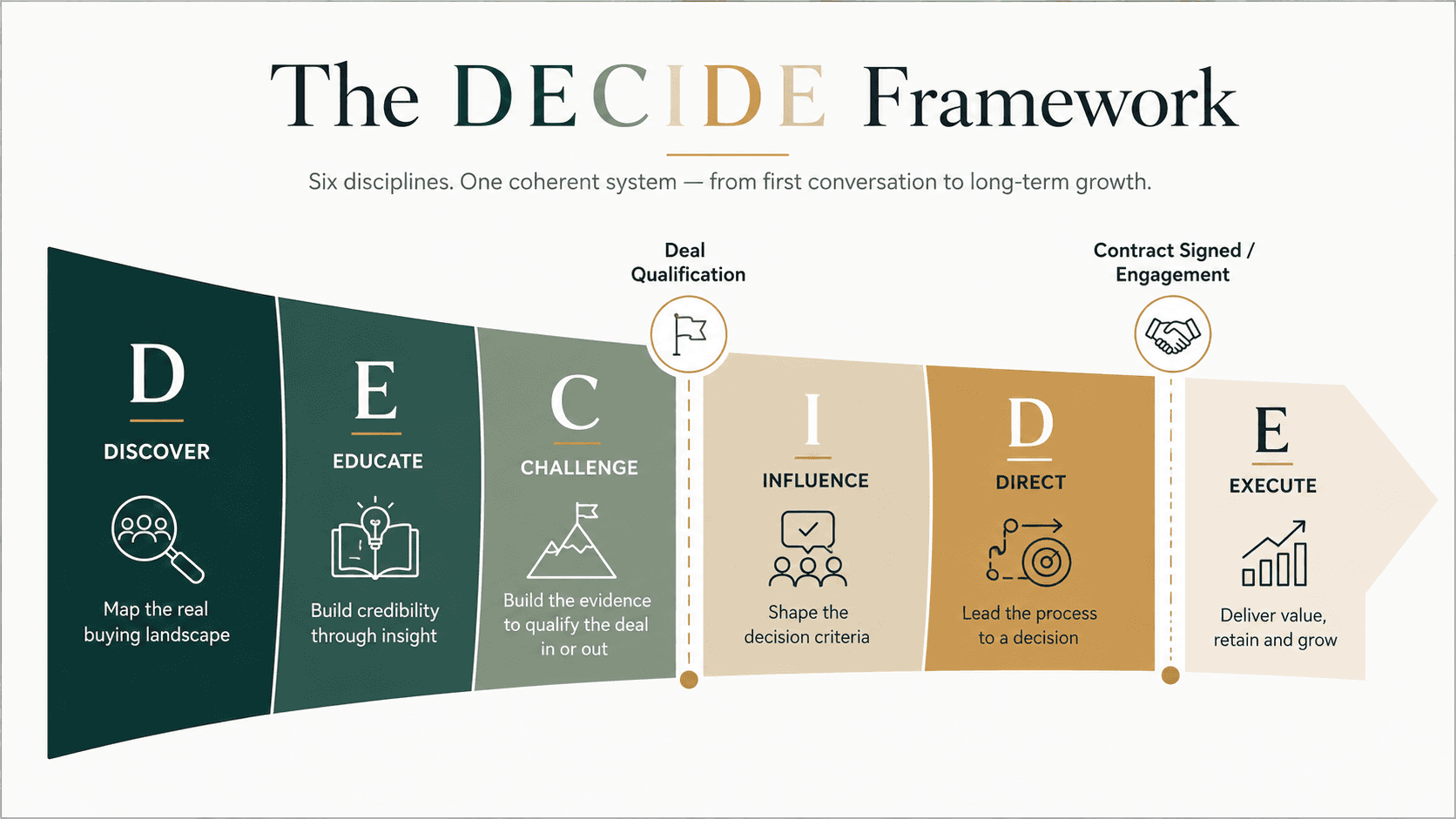
Most B2B sales organisations don't fail because of bad people. They fail because they lack a shared language and a structured approach to the full commercial cycle. The DECIDE Framework provides that structure — from the first conversation to long-term account growth.
The six disciplines map directly onto the sales stages most B2B organisations already use — just with more intention behind each one. Three phases build the foundation before qualification: understanding the landscape, earning credibility, and making an honest call on whether to invest further. Two phases drive the deal to a decision: shaping how value is evaluated and leading the process with clarity. The final phase is where revenue compounds — turning a signed contract into a satisfied client who buys more, stays longer, and refers others.
The names matter. Educate, Challenge, Illustrate, Direct — each reflects a deliberate choice about what modern B2B selling actually requires. Responding well to inbound requests is no longer enough. Buyers in complex B2B environments expect more from the sales professionals they engage with. They want to be challenged on assumptions they didn't know they had. They want to learn something they couldn't have googled. They want a counterpart who brings a point of view — not just a product. That's the Challenger mindset this framework is built on.
Map the real buying landscape.
Most sales conversations start too early — before the seller truly understands who is involved, what they care about, and what will actually drive the decision. Discover is about slowing down to go faster. It means investing time to map the full stakeholder landscape, understand the political dynamics, surface the history of the problem, and clarify what criteria will ultimately determine the outcome. Without this foundation, everything that follows is guesswork.
Do you know exactly who will make this decision and what they each need to see?
Build credibility through insight.
Buyers don't want to be sold to. They want to make good decisions. The most effective sales professionals position themselves as thinking partners, not vendors. Educate is about sharing genuine insight that helps buyers think differently about their situation — demonstrating expertise in a way that earns trust and creates preference. A seller who consistently brings relevant perspective becomes a resource the buyer wants to return to, long before any formal evaluation begins.
Are you seen as a trusted advisor — or just another vendor in the process?
Build the evidence to qualify the deal — in or out.
Not every opportunity is worth pursuing. Challenge is the discipline of honest qualification: gathering the evidence to make a clear-eyed decision about whether this deal has the conditions to close — and whether it deserves continued investment. This means asking hard questions about budget, authority, timeline, and fit, and being willing to walk away when the answers don't stack up. The best sellers disqualify early and concentrate their energy where they can genuinely win.
Do you have enough evidence to confidently say this deal is in — or are you hoping?
Bring the value proposition to life.
Winning deals are rarely decided on features alone. Illustrate is about making your value proposition tangible, credible, and memorable — translating capability into concrete impact that resonates with each stakeholder. This means going beyond slide decks to show, not just tell: proof points, demos, case studies, and proposals that are built around the buyer's world, not your own. Sellers who illustrate well give buyers something they can see themselves in — and something they can share internally to build the case.
Have you made the value so concrete and credible that the buyer can picture it — and defend it internally?
Lead the process to a decision.
Deals don't close themselves. Even when buyers are motivated and the value is clear, complexity, internal politics, and competing priorities can stall progress indefinitely. Direct is about taking ownership of the process — being proactive, structured, and explicit about what needs to happen next and why. A seller who leads the process with clarity and discipline is easier to buy from, and closes significantly more than one who waits for the buyer to move.
Do you own the momentum in this deal — or are you waiting for the buyer?
Deliver value. Retain and grow.
Winning the deal is not the finish line — it is the starting line of the real commercial relationship. Execute is about delivering on what was promised, creating tangible early value, and building the kind of client relationship that leads to retention, expansion, and referrals. The best sales organisations understand that a great delivery is also the most powerful sales tool they have: it removes risk for the next decision and makes renewal and growth the obvious choice.
Are you delivering outcomes that make renewal and expansion the obvious choice?